Manual spare parts processes cost time, revenue and customer satisfaction
Customers need spare parts quickly. In many service organizations, spare parts requests still arrive by phone, email, PDF catalog or outdated documentation. Your service team then has to clarify part numbers, machine context, availability and documents manually instead of processing spare parts revenue efficiently.
Unclear part identification
Customers cannot find the correct part number or send incomplete requests without machine, assembly or bill-of-materials context.
High effort in service
Back office, hotline and technical teams have to combine photos, serial numbers, documents and old orders across several systems.
Revenue with friction
Wrong orders, follow-up questions and slow quotation processes hold back an after-sales area that should scale more efficiently.
Find, identify and request spare parts digitally
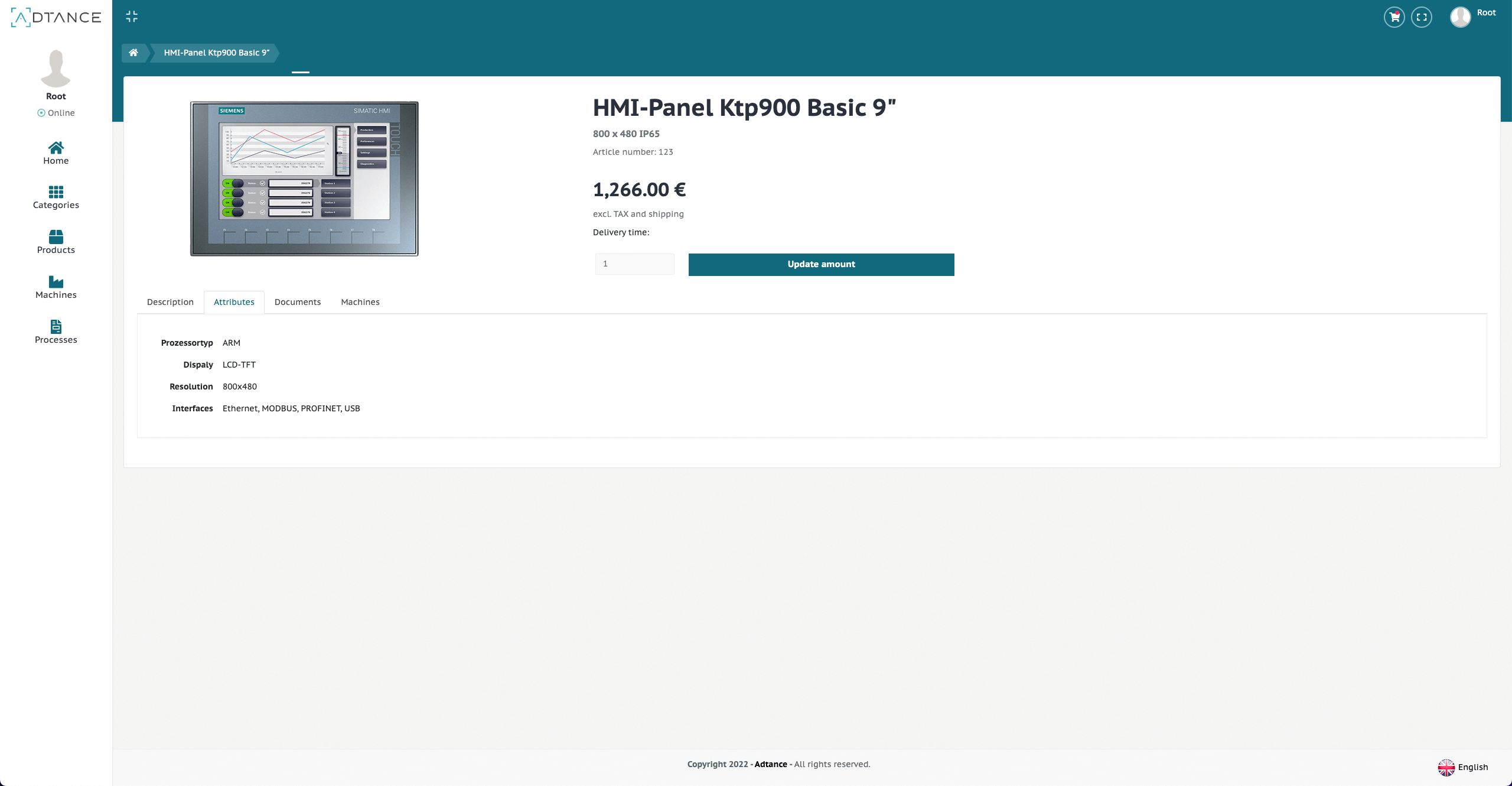
With ADTANCE Parts, spare parts are made available in a structured way inside the customer portal. Customers, operators and service teams find the right parts by machine, asset, assembly, drawing, bill of materials or catalog structure and can trigger requests or orders digitally.
Machine and asset context
Spare parts are assigned directly to the right machine, plant, serial number or assembly.
Digital catalog
Parts, images, descriptions, numbers and variants become searchable for customers and internal teams.
Bills of materials and drawings
BOM data, exploded views, technical drawings and documents support clear identification.
Cart and request
Customers select parts and quantities and submit a structured spare parts request or order.
Prices and availability
Depending on your system landscape, prices, stock levels or delivery information can be reused from connected systems.
Documents and service information
Manuals, maintenance documents, test reports and technical data sheets can be provided in the context of the part.
Shop and ERP processes
Requests, carts or orders can be passed to existing ERP, shop or service processes.
Roles and customer portal
Customers, partners and internal teams only see the information that is relevant and approved for them.
From machine context to the right spare part
The biggest impact comes when spare parts are not isolated in a catalog, but available in the context of the machine, documentation and service case.
Select machine
The customer or technician starts in the customer portal via machine, plant, site or asset.
Open assembly
The catalog, bill of materials, drawing or document leads to the relevant assembly.
Identify part
Images, numbers, descriptions and documents reduce uncertainty.
Select quantity
Parts are transferred to a cart, request or ordering process.
Send request
The request contains more context and requires fewer manual follow-up questions.
Continue process
Service, ERP, shop or ticketing processes the request in a structured way.
Fewer follow-up questions, fewer wrong orders, more self-service
Before
- Customers search in PDF catalogs, old documents or email threads.
- Requests arrive without clear part number, machine or BOM context.
- Service and back-office teams manually research in several systems.
- Wrong orders cause follow-up questions, returns and frustration.
- Spare parts sales depend heavily on office hours and personal handling.
With ADTANCE Parts
- Customers find spare parts in the digital catalog of the customer portal.
- Requests contain machine, assembly, part and quantity context.
- Teams work with more structured data and less manual clarification.
- Parts are selected more clearly and wrong orders are reduced.
- Spare parts revenue becomes more scalable as a self-service process.
ADTANCE Parts in the customer portal
ADTANCE Parts is part of the ADTANCE service platform for machinery and plant engineering after-sales. This connects the spare parts process with other service processes: Asset Management provides machine and plant context, DMS provides technical documents, Ticketing structures spare parts and service requests and Remote Support helps when customers need additional support on site.
For the business case around spare parts revenue, follow-up questions and wrong orders, see the use case Spare parts portal for machinery and plant engineering.
Integration with ERP, shop, PIM, PLM and documentation
A digital spare parts catalog becomes truly valuable when it uses existing data. ADTANCE Parts can combine or import material masters, bills of materials, product images, documents and ordering information from existing systems.
ERP and shop
Material masters, prices, stock levels, cart processes and orders can be connected to existing ERP or shop processes.
PIM, PLM and bills of materials
Product data, variants, assemblies and BOM information help provide spare parts in a structured and up-to-date way.
DMS and technical documentation
Manuals, drawings, data sheets and service documents become available exactly where customers search for the right part.
Excel and existing data sets
If no complete material master exists yet, existing lists and image data can be used as a starting point.
Who is ADTANCE Parts built for?
Machine builders, plant manufacturers and OEMs
For manufacturers that want to sell spare parts digitally, strengthen customer loyalty and make after-sales revenue more scalable.
Service management
For teams that want to reduce follow-up questions, wrong orders and manual clarification in the spare parts business.
After-sales and sales
For teams that want to make spare parts visible, requestable and usable as a digital revenue channel 24/7.
IT and digitalization
For companies that want to combine spare parts data from ERP, shop, PIM, PLM, DMS and machine records in one customer portal.
For machine builders, plant manufacturers and industrial service organizations with complex spare parts structures, many variants and machinery that requires explanation.
Frequently asked questions about digital spare parts catalogs
What is a digital spare parts catalog?
A digital spare parts catalog lets customers search, identify and request or order the right spare parts online. In machinery and plant engineering, it helps find parts by machine, serial number, assembly, drawing or bill of materials.
Who is ADTANCE Parts suitable for?
ADTANCE Parts is suitable for machine builders, plant manufacturers and industrial service organizations that want to digitize spare parts requests, offer customer self-service and reduce manual clarification.
Can spare parts be ordered directly?
Depending on the system landscape, ADTANCE Parts can support spare parts requests, cart processes or orders and connect them to existing ERP, shop or service processes.
Does ADTANCE Parts help reduce wrong orders?
Yes. The digital spare parts catalog helps customers identify parts more clearly and submit requests with more machine, assembly and part context.
Can the spare parts catalog be integrated into the customer portal?
Yes. ADTANCE Parts is positioned as part of the digital customer portal together with machine information, documents, tickets, remote support and service processes.
Which data sources can be connected?
Typical data sources include ERP, shop, PIM, PLM, DMS, bills of materials, technical drawings, product images and machine records.
How digital is your spare parts process today?
In a short Parts demo, we show how spare parts catalog, machine context, customer portal and request process work together - and where your biggest lever for less effort and more after-sales revenue is.
Analyze spare parts process Review spare parts process Overview of all Smart Services